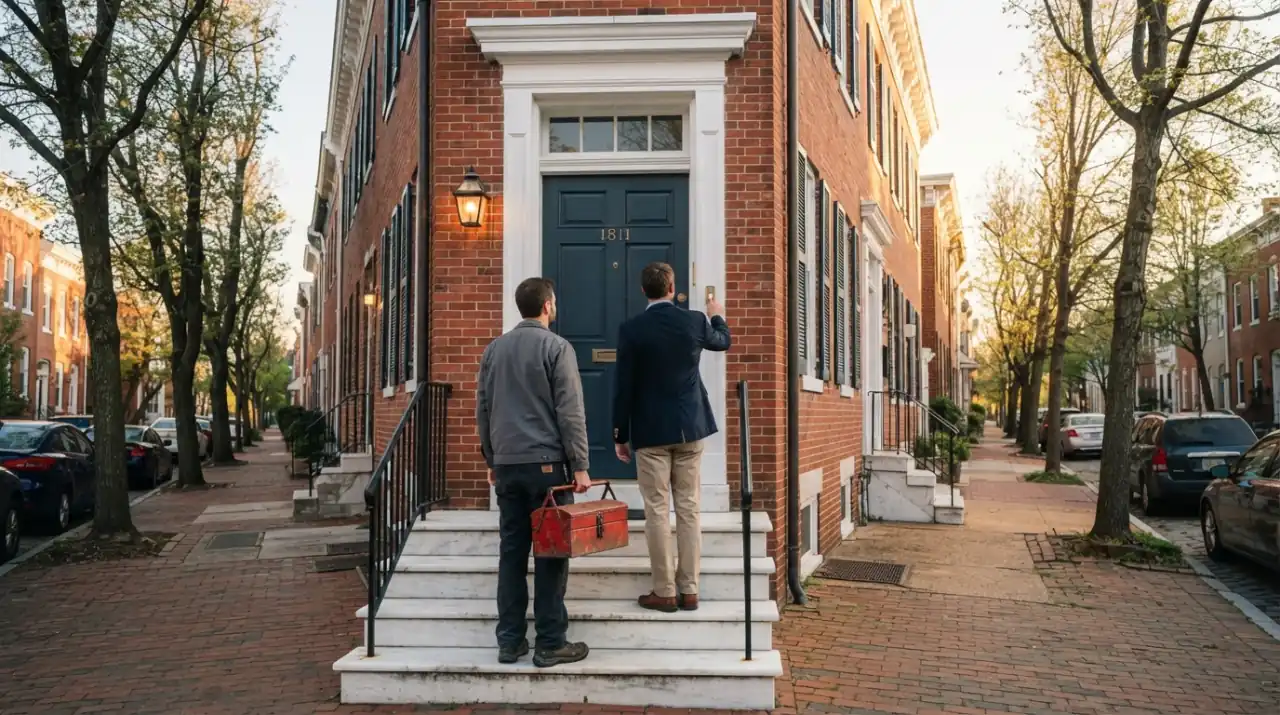
Landlords often ask how many days it takes for a guest to become a resident in Maryland. The Real Property Article sections that govern removing someone from a home, § 8-402 for tenants holding over and § 14-132 for wrongful detainer, don’t set a number of days. The practical question is which of those two court actions fits the person living in your property. That depends on whether they have a right to be there, and how they got it.

Two court actions, two different situations
Tenant holding over: § 8-402
Section 8-402 covers tenancies “for any definite term or at will.” A tenancy at will is an open-ended arrangement with no fixed end date. When a landlord wants such a tenancy to end, the landlord gives written notice under § 8-402(c), and if the occupant stays past the date, files a tenant holding over case in District Court.
For a month-to-month tenancy, that notice is 60 days before the tenancy ends. For a week-to-week tenancy it is 7 days with a written lease or 21 days without one. Our guide to Maryland eviction notice periods covers the rest.
In Baltimore City, one shortcut is off the table. Elsewhere in Maryland, a tenant’s oral notice that they will move out can, if proved in court, stand in for the landlord’s written notice. That rule doesn’t apply in Baltimore City.
Wrongful detainer: § 14-132
Section 14-132 defines wrongful detainer as holding possession of real property “without the right of possession.” The person claiming possession files a written complaint in the District Court where the property is located. The section doesn’t apply if:
- the occupant holds possession under a court order;
- a remedy is available under Title 8 of the Real Property Article, which is where the landlord-tenant actions are; or
- another statute or rule provides an exclusive way to recover possession.
That second limit decides most guest cases. If the facts give the occupant any kind of tenancy, including a tenancy at will, a Title 8 remedy exists and wrongful detainer is the wrong case.
What tends to turn a guest into a tenant
The statute doesn’t list factors, so this part comes from the structure of the law rather than a checklist in it. The question a court asks is whether the person has a right of possession that came from the owner or the tenant. The facts that point toward one:
- Money for occupancy. Rent, or “help with the bills” in exchange for staying, looks like a tenancy. In Baltimore City it raises a second problem. City Code Article 13, § 5-4 bars anyone from charging, accepting, keeping or trying to collect rent or any other payment for occupancy of a rental dwelling unless they were licensed both when they offered and when they provided the occupancy.
- Permission to stay with no end date. An open-ended “stay as long as you need” is the shape of a tenancy at will.
- Being treated as an occupant. A key, repair requests answered, or mail and deliveries accepted at the address all make it harder to argue the person was only visiting.
If the facts are mixed, don’t guess. Choosing the wrong action can mean a dismissed case and a restart.
How a wrongful detainer case runs
When wrongful detainer does fit, § 14-132 moves quickly:
- Hearing: no more than 10 business days after the complaint is filed.
- Service: if the occupant can’t be found after two good-faith attempts on different days, the process server files an affidavit, mails the complaint by certified mail (return receipt requested) and first-class mail, and posts the summons on the property. That service must be made within 4 business days of filing.
- No counterclaims: the occupant can’t file a counterclaim or cross-claim in the case.
- Damages: the court may also award damages, court costs and attorney fees if the complaint asked for damages and the occupant was personally served or otherwise subject to the court’s jurisdiction.
- Jury trial: either party may demand one, subject to § 8-118.1.
- Appeal: either side may appeal to circuit court within 10 days of the judgment. The occupant can stay during the appeal by filing an affidavit that the appeal isn’t for delay and either posting bond or paying the fair rental value, court costs and damages.
What you can’t do in either case
Under § 8-216, a landlord may not lock out a tenant or a tenant holding over, or cut heat, water, hot water, electricity or gas to force them out. Possession comes only through a court warrant executed by a sheriff or constable, or when the unit is abandoned or surrendered. If there is any chance the person is a tenant at will, treat them as one and go to court.
Keep guests from becoming a question
- Name every adult occupant on the lease, and add a guest clause that sets how long a visitor may stay before they must apply.
- Never take money from a guest for staying, and tell your tenant not to collect rent from one either.
- Keep your city license current. Under § 5-4, a lapsed license affects whether you can collect rent at all.
- Write down the timeline the day you notice a long stay: who invited them, when they arrived, whether they have a key, and any money that changed hands.
For a step-by-step look at the line between guest and tenant, see when a guest becomes a tenant in Maryland and our guide on removing an overstaying guest in Baltimore.
The Mindful Landlord manages 50+ properties across Baltimore City and Baltimore County. To talk about a situation at your rental, visit https://the-mindful-landlord.com/contact or call (443) 378-9456.