We wrote an earlier piece on when a guest becomes a tenant in Baltimore.
Two Different Cases at the Same Courthouse
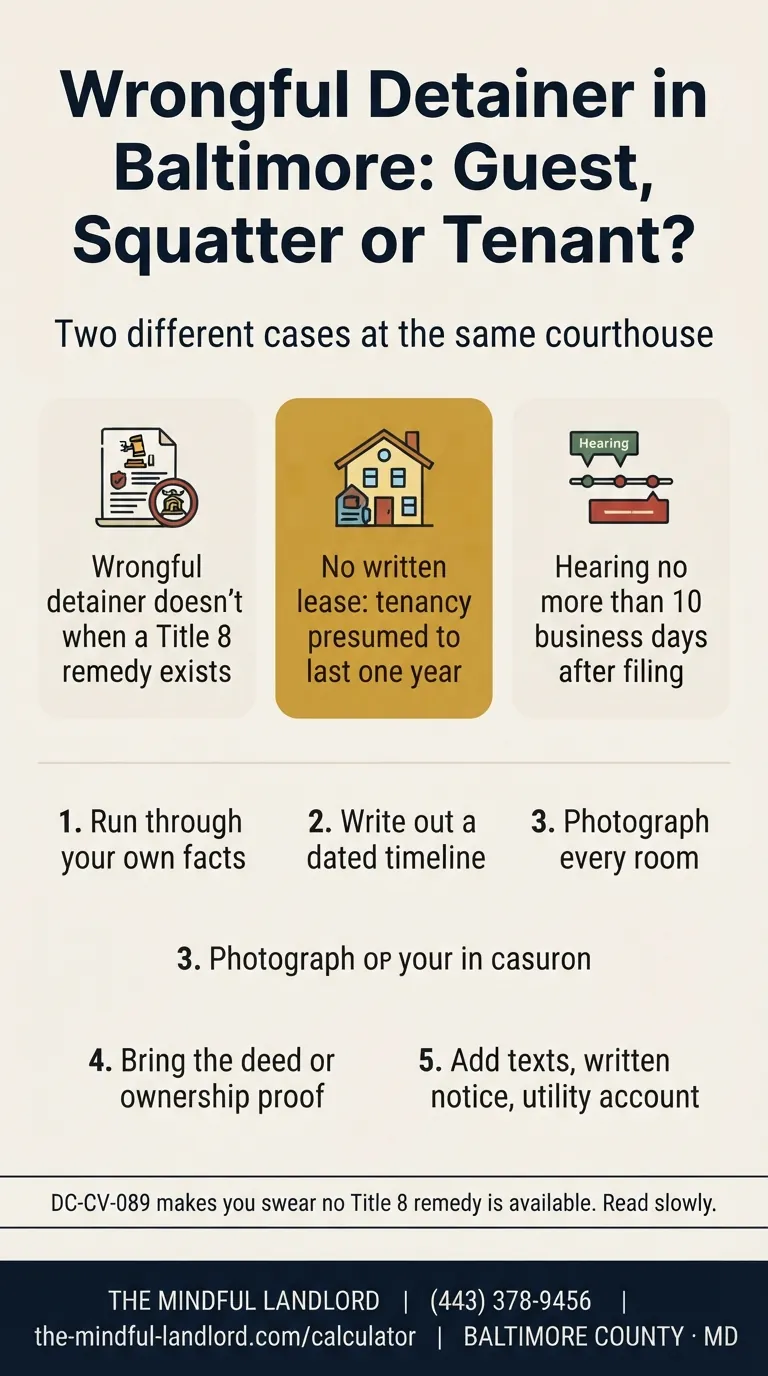
The statute keeps two different kinds of cases apart. Maryland’s wrongful detainer statute, Real Property § 14-132, covers someone holding real property without the right to possess it. That statute doesn’t apply when a remedy exists under Title 8.
The court’s own form forces the issue. The Complaint for Wrongful Detainer, DC-CV-089, makes the plaintiff swear that no Title 8 remedy is available. Read that line slowly before you sign it.
How a Couch Arrangement Drifts Into a Tenancy in the City
The Maryland Tenants’ Bill of Rights says landlords with four or fewer units don’t have to use a written lease. Without a written lease, the tenancy is presumed to last one year from the tenant’s first use of the unit.
The Public Justice Center gave legislators an example in 2025 testimony. A new owner of a Baltimore City home filed wrongful detainer against seven elderly or disabled long-time residents who paid rent, believing they weren’t tenants because he hadn’t signed a lease with them. The Public Justice Center called that belief wrong, though that was advocacy testimony and not a court ruling. The Public Justice Center told legislators in 2026 that it frequently represents renters falsely accused of being squatters.
Run through your own facts before you choose a form.
What Wrongful Detainer Looks Like Since the Law Changed
Chapter 188 of 2025, which started as SB 46, took effect October 1, 2025. Under the current text, the hearing must be held no more than 10 business days after the complaint is filed.
If the process server can’t find the occupant after two good-faith tries on different days, the server files an affidavit, the complaint goes out by certified mail and first-class mail, and the summons gets posted on the property. The occupant can’t file a counterclaim or cross-claim in a wrongful detainer case.
Appeals work differently. Either side may appeal to circuit court within 10 days. To stay in the house during that appeal, the occupant has to file an affidavit and meet bond or payment requirements. Either party can demand a jury trial, subject to § 8-118.1.
A 2026 bill, HB 858, would have changed the hearing deadline from 10 business days to 14 calendar days. It never moved past its House Judiciary hearing, so the 10-business-day rule still stands.
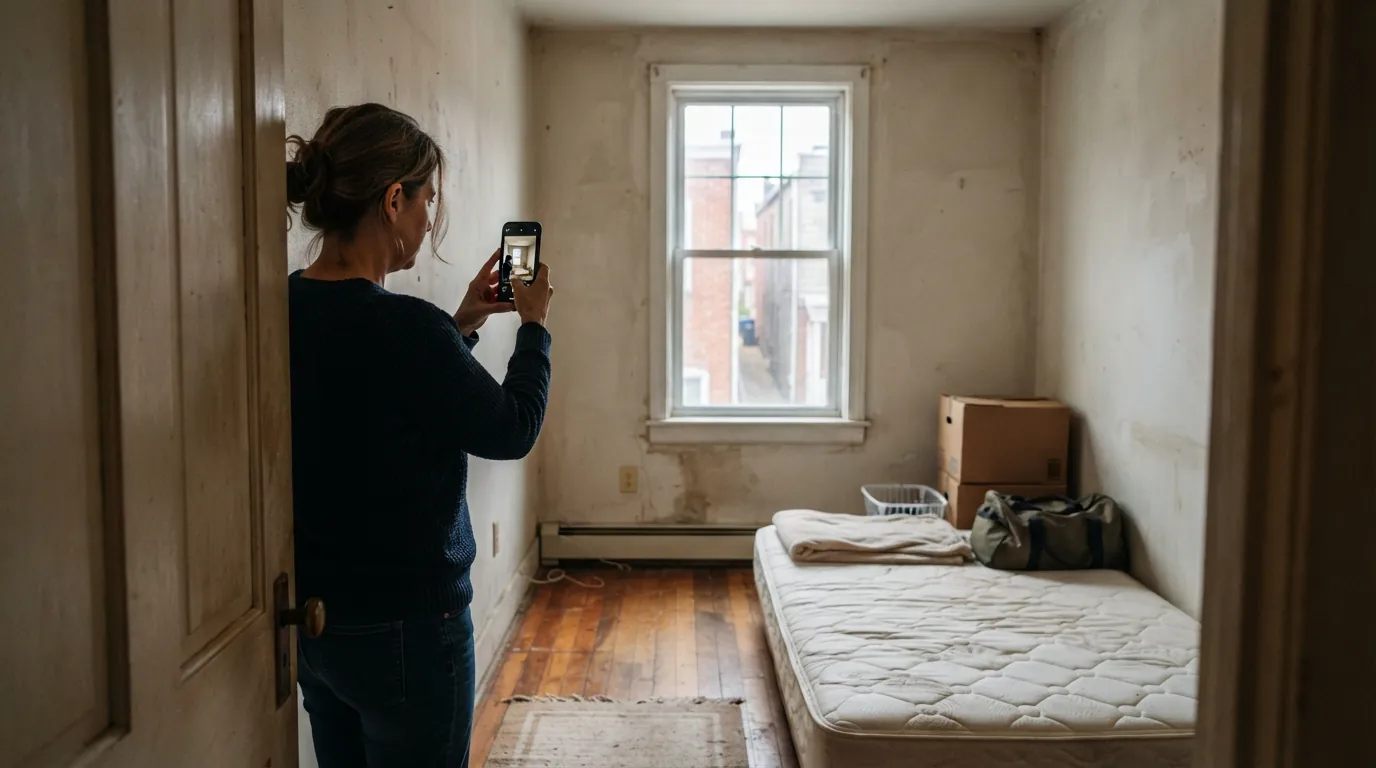
Before you file this complaint, write out a dated timeline and photograph every room. Bring the deed or other proof of ownership. Add anything showing the person never paid or was told to leave, like texts, a written notice, or a utility account that’s always been in your name.
Own a rental in Baltimore City or Baltimore County? Tell us about it at https://the-mindful-landlord.com/contact or call (443) 378-9456. To see the numbers first, use the free calculator at https://the-mindful-landlord.com/calculator.
When the Answer Is Tenant
A tenant in Baltimore City needs to give only 30 days’ notice to end a tenancy under Public Local Law § 9-16, unless the lease requires more time.
SB 462 in 2026 would have let counties adopt good-cause eviction laws covering non-renewals and holdovers, and it stopped at a Senate committee hearing.
Eviction Day With the Baltimore City Sheriff
The sheriff’s eviction page says the city’s special eviction-date notice rules apply only to nonpayment-of-rent cases. Those rules don’t apply to holding over, breach of lease, nuisance, or wrongful detainer evictions. You can still mail the occupant a short letter with the scheduled date and keep a copy in your file. An occupant who knows the date has time to move belongings out before the crew shows up, which leaves you less to deal with afterward.
Be careful with whatever gets left behind. The sheriff’s page says leftover property is considered abandoned. Don’t haul anything to the curb without a plan your attorney has signed off on, and photograph each room before a single item moves.
Keeping Guests From Turning Into Tenants on a Fells Point Block or Anywhere Else
Forged leases are now covered by Maryland’s counterfeiting law. SB 82, now Chapter 550 of 2026, took effect October 1, 2026. It makes it a crime, with intent to defraud, to create, help create, or possess a counterfeit lease or rental agreement for real property, by amending Criminal Law § 8-601. The bill’s fiscal note says counterfeiting a listed document under § 8-601 is a felony with up to 10 years. Knowingly and willfully possessing a counterfeit with fraudulent intent is a misdemeanor. If someone waves a lease at you that you never signed, you’ll want your real leases, signatures and rent records filed where you can pull them in minutes.
Vacant houses need their own routine. Check them on a schedule. Keep the utilities in your name, and post no-trespassing notices so you can show the occupant was never invited.
If you decide to let the guest stay and rent, do it properly from day one. Run a full application. If you give a written lease, it has to include the Tenants’ Bill of Rights. Our tenant placement and screening page walks through how we handle that intake.
If your rental sits in Baltimore County, our Baltimore County management page covers how that side works for owners.
If you’d rather hand this off, call (443) 378-9456 or tell us about your property at https://the-mindful-landlord.com/contact. The free calculator at https://the-mindful-landlord.com/calculator shows what management would look like for your unit.