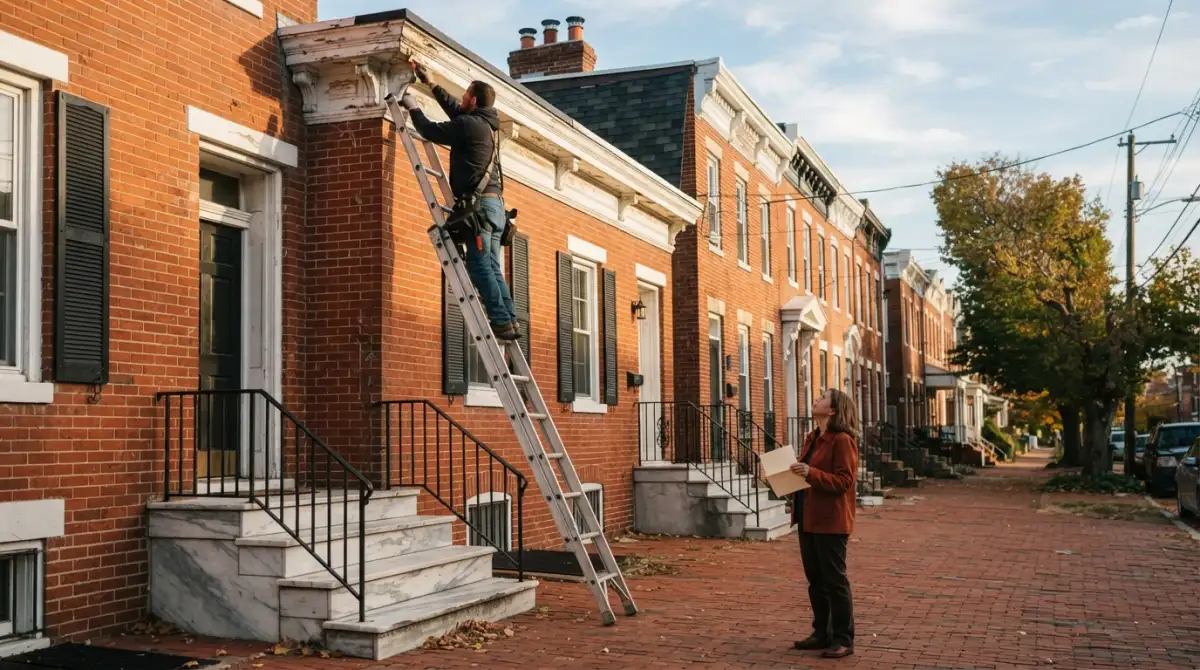
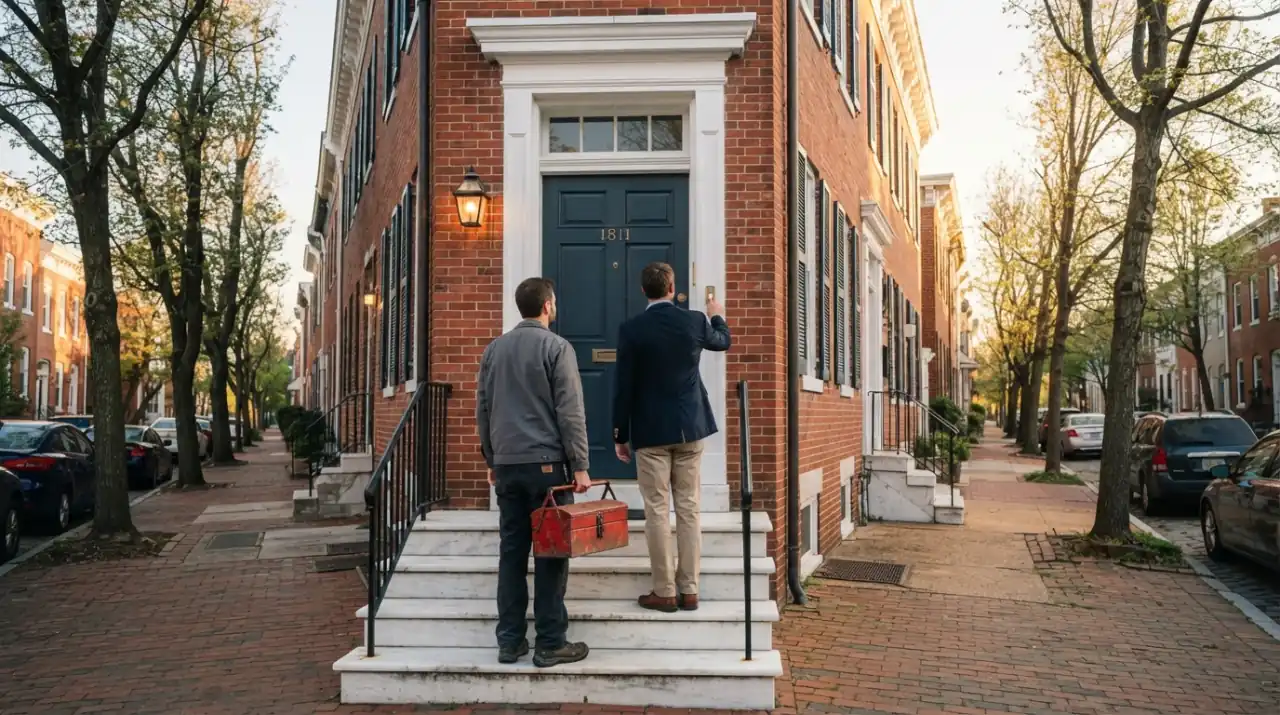
A good interview with a property manager tests whether they know the rules your downtown unit runs on. Baltimore City adds its own licensing and eviction-date rules on top of Maryland’s statewide landlord-tenant law, and a manager who gets them wrong can cost you rent or a court case. Here are the questions worth asking, each with the rule a good answer should match.

”How do you keep my rental license current?”
Baltimore City Code Article 13, § 5-4 bars renting, or offering to rent, a rental dwelling without a current license from the Housing Commissioner. It also bars charging, accepting, keeping or trying to collect rent unless the landlord was licensed both when offering the unit and when providing it. A lapsed license puts the rent itself at risk.
According to the city’s Department of Housing and Community Development, each unit needs a passing inspection from a Maryland-licensed home inspector registered with the department, or a passing Section 8 inspection report. For a new registration, the report has to be submitted within 90 days of the inspection. A good manager tracks the expiration date and books the inspection well ahead of it.
”How do you handle security deposits?”
Under Real Property § 8-203:
- The deposit can’t exceed 1 month’s rent per unit. Up to 2 months’ rent is allowed only when the tenant qualified for utility assistance through the Department of Human Services, the lease requires paying utilities to the landlord, and both sides agree in writing.
- It goes into an interest-bearing account, used only for security deposits, at a Maryland branch of a federally insured institution, within 30 days.
- It comes back within 45 days after the tenancy ends, with simple interest at the 1-year U.S. Treasury yield curve rate as of the first business day of each year or 1.5% a year, whichever is greater. Interest is owed only on deposits of $50 or more, once the deposit has been held at least 6 months.
- Any deduction needs a written list of damages and an itemized statement of costs, with supporting documentation, mailed first-class within 45 days. Withholding without a reasonable basis exposes the landlord to up to three times the amount withheld, plus reasonable attorney’s fees.
Ask the manager to walk you through their move-out process. The answer should hit all of these.
”How do you schedule entry for repairs and showings?”
Section 8-221 requires written notice at least 24 hours before a non-emergency entry, stating the date, approximate time and purpose. Entry is limited to 7:00 a.m. to 7:00 p.m., Monday through Saturday, unless the tenant agrees in writing to another time. Electronic notice counts only if the tenant chose it. The landlord is liable for violations by an agent acting at its direction, which includes a manager and its contractors.
”How do you handle rent increases and renewals?”
Section 8-209 requires written notice of a rent increase: at least 90 days ahead for a tenancy with a term of more than a month, and 60 days for a term of more than a week up to a month. The notice goes by first-class mail with a certificate of mailing, or electronically if the tenant chose that. In Baltimore City, an open violation notice for serious defects can block a rent increase until it is abated (City Code, Article 13, § 8-2). Our guide on how to raise rent in Baltimore covers the details.
”What is your screening process?”
Maryland bars refusing to rent because of source of income, which includes housing vouchers (State Government §§ 20-701, 20-705). A landlord can still verify income and creditworthiness “in a commercially reasonable and nondiscriminatory manner.” Since October 1, 2026, the Maryland Fair Chance Housing Act also limits criminal history checks for landlords who own or manage five or more units. Ask whether the manager’s written criteria, notices and timing follow it. Our fair housing screening guide explains what the Act requires.
”What happens when rent is late?”
Before filing a failure-to-pay-rent case, the landlord must give the tenant 10 days’ written notice on the Judiciary’s form DC-CV-115 (§ 8-401(c)). The District Court’s filing fee for that case in Baltimore City is $60 (cost schedule DCA-109, Rev. 03/2026). After a judgment, Baltimore City also requires the notice of the first scheduled eviction date to be mailed at least 14 days before it and posted at least 7 days before (City Code, Article 13, § 8A-2). A manager should be able to describe each step without looking it up. See our Maryland eviction process guide for the full sequence.
”What do you charge?”
Get every fee in writing: the monthly management fee, any leasing or renewal fee, and how repair invoices are billed. Compare managers on the total, not the headline rate. For reference, The Mindful Landlord’s full management fee is a flat 10% of the monthly rent collected, as published on our pricing page.
A short checklist for the interview
- Ask for the date your current rental license expires and how they’ll renew it.
- Ask where and how security deposits are held.
- Ask to see their written entry notice and rent increase notice.
- Ask for their written screening criteria.
- Ask for the full fee schedule in writing.
The Mindful Landlord manages 50+ properties across Baltimore City and Baltimore County. To talk about your downtown rental, visit https://the-mindful-landlord.com/contact or call (443) 378-9456.