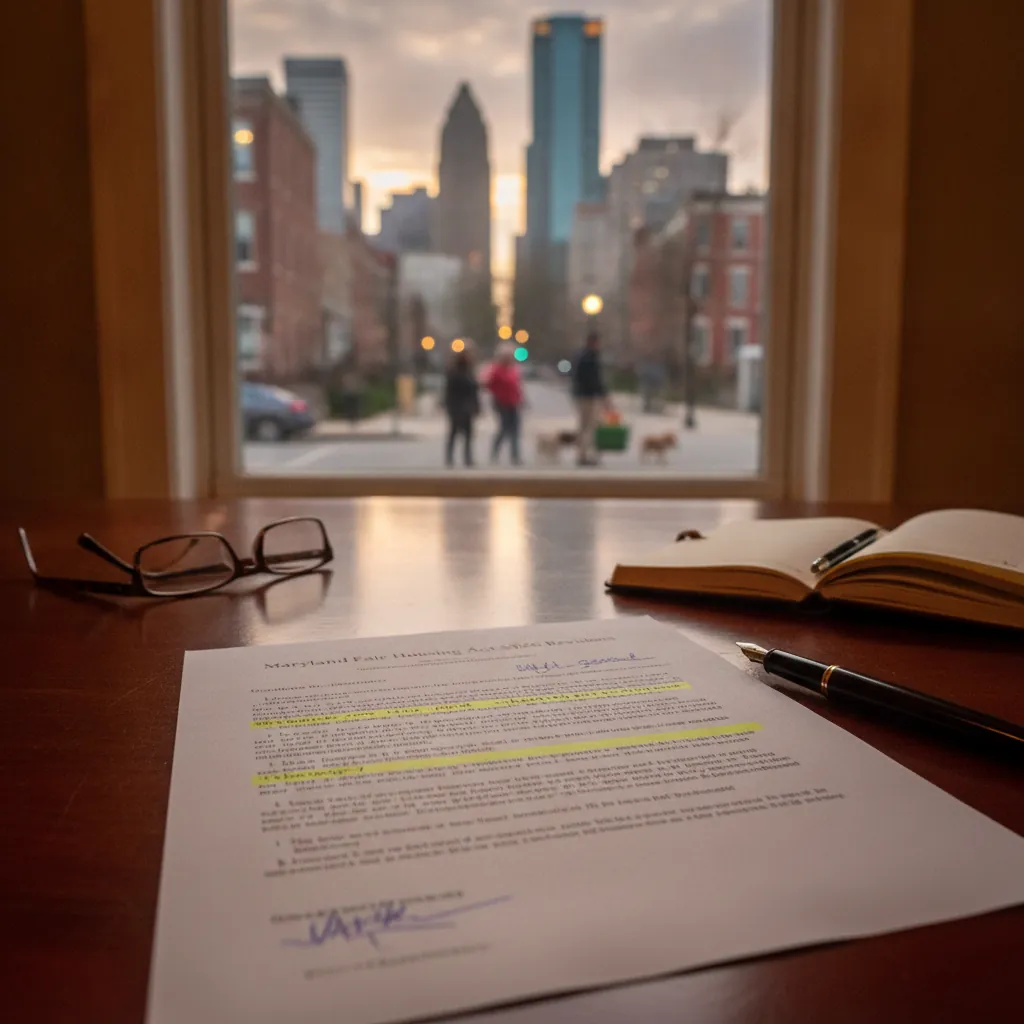
Yes, you can raise rent on your Baltimore rental property — but the rules depend on whether your property is in Baltimore City or Baltimore County. Baltimore County landlords have no rent control restrictions and can increase rent by any amount with proper written notice. Baltimore City landlords face a CPI-based cap (approximately 2.4% for 2025–2026) and stricter notice requirements. In either case, you need to follow Maryland law, time it right, and communicate clearly with your tenants.
This guide walks you through the legal requirements, the key differences between Baltimore City and Baltimore County, and practical strategies to raise rent without losing your best tenants. Whether you own one rental or a dozen, getting this right protects your income and your landlord-tenant relationship.
Baltimore City vs. Baltimore County: Two Very Different Sets of Rules
One of the most common mistakes Baltimore landlords make is assuming the same rent increase rules apply everywhere. They don’t. Baltimore City and Baltimore County operate under completely different frameworks, and confusing the two can lead to legal trouble.
Baltimore County Rent Increase Rules
Baltimore County does not have rent control. Maryland does not impose a statewide rent cap, and Baltimore County has not enacted any local rent stabilization ordinances. This means landlords in areas like Towson, Dundalk, Essex, Parkville, Perry Hall, Owings Mills, and Catonsville can raise rent by any amount they choose.
The key requirements in Baltimore County are straightforward. You must provide written notice before the increase takes effect — typically 30 days for month-to-month tenancies. If the tenant is on a fixed-term lease, you can only raise rent when the lease renews. You cannot raise rent mid-lease unless the lease specifically allows for it.
Baltimore City Rent Increase Rules
Baltimore City has a rent stabilization ordinance that limits how much landlords can increase rent on certain properties. For 2025–2026, the cap is tied to the regional Consumer Price Index (CPI), which has been approximately 2.4%. This cap applies to most multifamily rental properties and condominiums within city limits.
There are important notice requirements in Baltimore City. For any rent increase over 4%, landlords must provide at least 60 days of written notice. For increases at or below 4%, the standard notice period applies. Single-family homes, new construction, and certain small properties may be exempt from the rent stabilization ordinance — but you should verify your property’s status before assuming you’re exempt.
How Much Should You Raise Rent in Baltimore?
Just because you can raise rent doesn’t mean you should raise it as much as possible. The goal is to keep your rental income in line with the market while retaining good tenants. Vacancy costs far more than a modest rent increase.
Current Baltimore Rental Market Data (2026)
Understanding the local market helps you set a competitive price. As of early 2026, here’s what Baltimore-area rents look like:
| Unit Type | Baltimore City Median | Baltimore Metro Average |
|---|---|---|
| Studio | $1,355 | $1,200–$1,400 |
| 1-Bedroom | $1,527 | $1,400–$1,700 |
| 2-Bedroom | $1,725 | $1,600–$2,000 |
| 3-Bedroom | $1,927 | $1,800–$2,300 |
| 4+ Bedroom | $2,465 | $2,200–$2,800 |
Year-over-year, Baltimore rents have increased approximately 3.0% as of early 2026, according to Zumper and RentCafe data. The overall median rent across all unit types sits around $1,600 in Baltimore City.
If your rent is significantly below these numbers, you have room to increase. If you’re already at or above market rate, a large increase risks pushing your tenant out — and an empty unit costs far more than a smaller raise.
The Cost of Getting It Wrong
Here’s the math that matters: if your 2-bedroom unit rents for $1,700 per month and sits vacant for just one month during a turnover, you lose $1,700 in rent plus an estimated $2,000–$4,000 in turnover costs (cleaning, repairs, marketing, screening). That’s $3,700–$5,700 lost. A $50/month rent increase only generates $600 per year. It takes nearly a full year of the higher rent just to recoup one month of vacancy.
The takeaway: a reasonable, market-aligned increase that keeps a good tenant is almost always better than a large increase that causes turnover.
Step-by-Step: How to Raise Rent Legally in Baltimore
Follow these steps whether your property is in Baltimore City or Baltimore County.
Step 1: Check Your Lease Terms
Review the current lease agreement. Most fixed-term leases lock in the rent for the entire lease period. You can only increase rent at renewal time unless the lease includes an escalation clause. For month-to-month tenancies, you can raise rent with proper notice at any time.
Step 2: Research Comparable Rents
Before setting your new rent amount, check what similar properties in your neighborhood are renting for. Use Zillow, Zumper, RentCafe, and Apartments.com to compare. Focus on units with similar square footage, bedroom count, condition, and amenities within a 1–2 mile radius of your property.
Step 3: Calculate Your Increase
A 3–5% annual increase is considered standard in most Baltimore County markets. In Baltimore City, your increase is capped at the CPI rate (approximately 2.4% for 2025–2026) for covered properties. Always round to a clean number — tenants respond better to “$1,750” than “$1,741.80.”
Step 4: Provide Proper Written Notice
This is the most legally important step. Maryland law requires written notice before any rent increase takes effect. The requirements differ by location:
- Baltimore County (month-to-month): Minimum 30 days written notice before the increase takes effect
- Baltimore County (lease renewal): Include the new rent amount in the renewal offer, sent at least 60 days before lease expiration to give tenants time to decide
- Baltimore City (increase over 4%): Minimum 60 days written notice required by the rent stabilization ordinance
- Baltimore City (increase at or below 4%): Standard notice period applies
Always deliver notice in writing — email, certified mail, or hand-delivered with a signed acknowledgment. Verbal notice is not sufficient and won’t hold up if disputed.
Step 5: Communicate the Value
Don’t just send a cold notice. Explain why the rent is increasing. Tenants who understand the reasoning — rising property taxes, insurance costs, maintenance investments, or market adjustments — are more likely to accept the increase and renew their lease. Mention any improvements you’ve made to the property since their last renewal.
What You Cannot Do When Raising Rent in Baltimore
Maryland law places several restrictions on rent increases regardless of where your property is located:
No retaliatory increases. You cannot raise rent because a tenant filed a complaint with a government agency about housing code violations, joined a tenant’s union, or exercised any legal right. Maryland Real Property Code § 8-208.1 specifically prohibits retaliatory rent increases.
No discriminatory increases. Under the Federal Fair Housing Act and Maryland’s Fair Housing law, you cannot raise rent to discriminate based on race, color, religion, sex, national origin, familial status, or disability.
No mid-lease increases. Unless your lease contains a specific escalation clause, you cannot raise rent during an active fixed-term lease. You must wait until the lease expires or converts to month-to-month.
5 Strategies to Raise Rent Without Losing Good Tenants
Keeping quality tenants is one of the most valuable things a Baltimore landlord can do. Here’s how to raise rent while maintaining strong tenant relationships.
1. Give Early Notice
Don’t wait until the last possible moment. Giving 90 days notice — even when only 30 is required — shows respect and gives tenants time to budget. Many tenants who would otherwise leave will stay if they feel the increase was handled fairly.
2. Keep Increases Small and Regular
A $50–$75/month increase annually is much easier for tenants to absorb than a $200 jump after three years of flat rent. Consistent, modest increases also keep your property closer to market rate at all times.
3. Tie Increases to Improvements
If you’ve upgraded appliances, repainted, installed new flooring, or improved landscaping, mention it in your renewal letter. Tenants are more accepting of higher rent when they can see the value.
4. Offer a Discount for Longer Leases
Consider offering a smaller increase (or no increase) for tenants who sign a 2-year lease. The guaranteed occupancy and avoided turnover costs often outweigh the revenue from a higher rent with a 1-year commitment.
5. Know When to Hold
If you have a tenant who pays on time every month, takes care of the property, and never causes problems, think carefully before pushing a large increase. A reliable tenant is worth their weight in gold — especially in Baltimore, where the average eviction process takes 2–4 months and costs $3,000–$5,000 in legal fees and lost rent.
How The Mindful Landlord Helps Baltimore Landlords Manage Rent Increases
The Mindful Landlord, a Baltimore County property management company, handles rent increase strategy as part of its full-service management. We analyze local market data, prepare legally compliant notices, and communicate with tenants to maximize retention. Our clients maintain a 98% occupancy rate — in part because we price rental increases strategically rather than reactively. With our 21-day tenant placement guarantee and $0 vacancy fees, landlords never pay for the downtime between tenants. If managing rent increases, tenant communication, and legal compliance sounds like more than you want to handle on your own, see our pricing or give us a call.
Frequently Asked Questions
How much notice do I need to give before raising rent in Baltimore County?
For month-to-month tenancies in Baltimore County, you must provide at least 30 days of written notice before the rent increase takes effect. For fixed-term leases, rent can only be increased at renewal time. Baltimore County does not have rent control, so there is no cap on the increase amount.
Is there a limit on how much I can raise rent in Baltimore City?
Yes. Baltimore City’s rent stabilization ordinance caps rent increases at the annual regional Consumer Price Index (CPI) rate, which was approximately 2.4% for 2025–2026. This applies to most multifamily properties and condos. Single-family homes and some new construction may be exempt. Increases over 4% require 60 days written notice.
Can I raise rent in the middle of a lease in Maryland?
No, unless your lease contains a specific escalation clause allowing mid-lease increases. For fixed-term leases, you must wait until the lease expires to implement a rent increase. For month-to-month tenancies, you can raise rent at any time with proper written notice.
What happens if I raise rent and my tenant refuses to pay the new amount?
If the tenant was given proper notice and the increase is legal, the tenant must either pay the new rent, negotiate a different amount, or vacate the property when their current lease term ends. If the tenant stays and refuses to pay, this constitutes a lease violation, and you can begin the Maryland eviction process. However, attempting to negotiate first is almost always cheaper and faster than eviction.
Should I raise rent every year on my Baltimore rental property?
In most cases, yes. Small annual increases of 3–5% keep your rental income aligned with rising costs for property taxes, insurance, and maintenance. Skipping increases for multiple years creates a gap between your rent and market rates, forcing you to make a large jump later — which is more likely to cause tenant turnover. Consistent, modest increases are better for both your cash flow and tenant retention.
Ready to stop managing and start owning? Get your free rental analysis today — see what your Baltimore property could earn with hands-off professional management.
Call (443) 378-9456 or visit the-mindful-landlord.com/contact for a same-day response.