Building the city license file
- Register every non-owner-occupied property by January 1, rented or not. Vacant houses count.
- Time the third-party inspection inside the window. The current code allows an inspection by a state-licensed home inspector registered with the City no more than 90 days before the application.
- Inspect every unit in buildings of nine units or fewer. In a six-unit building, that’s six unit inspections. Book the inspector’s time to match.
- Use a Section 8 report only if it’s less than a year old.
- Enter current lead certification for each unit.
- Give each resident a copy of the inspection report when you file the application.
Work backward from your filing date.
Here’s a hypothetical example. An owner has a duplex and a vacant single-family house. She lists all three units on one checklist, books a single inspector visit that covers both duplex units, and schedules the vacant house for the same week. Before she opens the application, she puts the lead certificate for each unit into one folder.
Keep a copy of everything you file: the application, each inspection report, each lead certificate, and a note of the date and method you used to give each resident their copy. A signed acknowledgment from each resident, or a dated photo of the report left at the door, gives you something to point to later.
If you also own property in the county, see Baltimore City vs. County rental licensing.
Keeping the state lead registration current
The City can issue or renew a license only if the property complies with all federal, state and city lead paint laws.
- Confirm the build year on every unit. Properties built after 1977 and those with a passing Lead Free certificate are exempt from registration.
- Know when each unit came under the law. Registration took effect January 1, 1996 for units built before 1950.
- Hit the renewal deadline. Renewal is due on or before December 31 of the renewal year.
- Never let a fee go unpaid. The civil penalty runs up to three times each unpaid fee, plus collection costs and attorney’s fees.
- Plan ahead when you buy. On the city side, licenses no longer transfer with a sale.
- Recheck rooming houses and shared setups. Chapter 225 (SB 872), effective October 1, 2026, changes the lead law’s definition of a rental dwelling unit. MDE testified that the bill would clarify coverage of rooming houses, SROs and shared-living arrangements, which current law lets landlords argue are exempt. Count rooms, not front doors.
What year was the building constructed, and which document shows that date? Is there a Lead Free certificate, and does it cover this specific unit? Has anyone added rooms or divided the space since that certificate was issued? If you can’t answer the first question with a document, treat the unit as covered until you can.
Not sure what your rental should earn or what this will cost you? Run the numbers in our free rental calculator at https://the-mindful-landlord.com/calculator, or call us at (443) 378-9456.
Turnover work before new keys go out
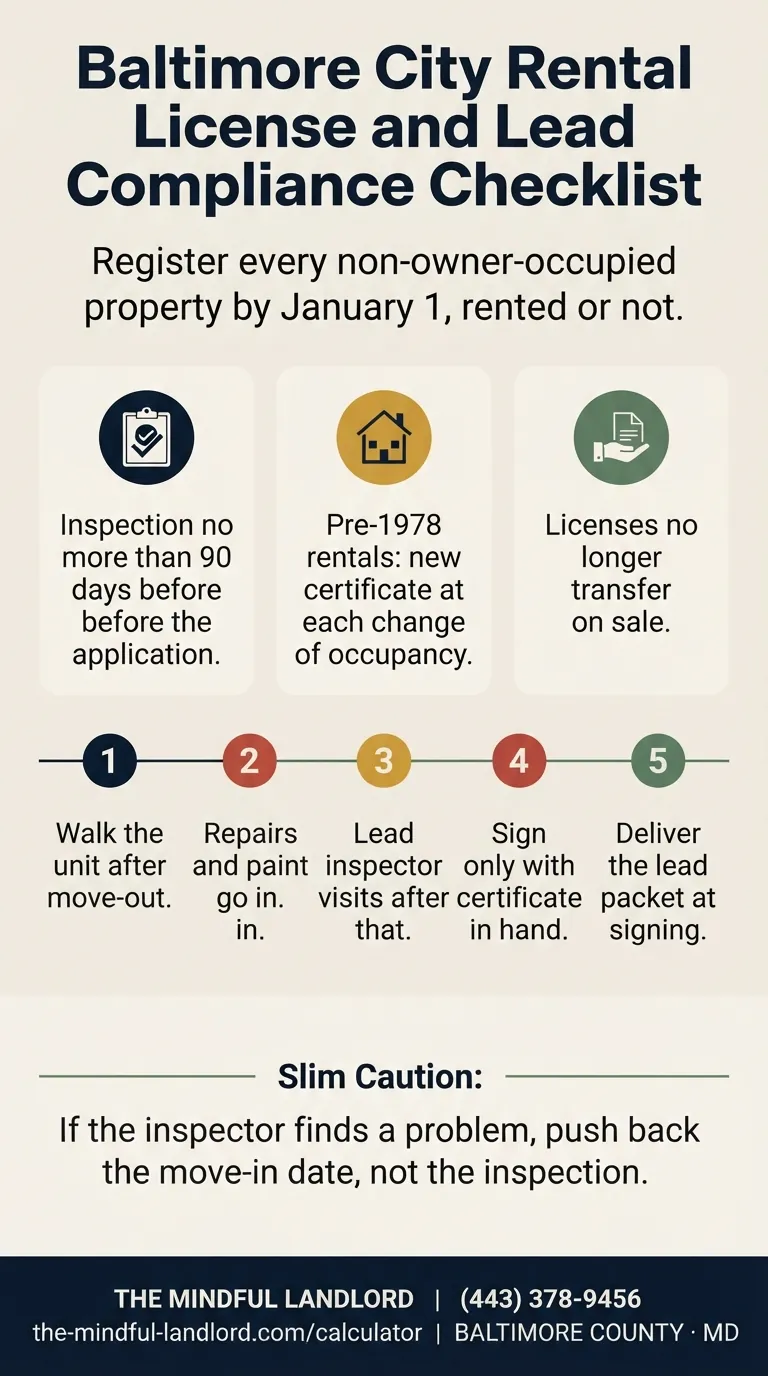
Since January 1, 2015, every pre-1978 rental has needed a new lead inspection certificate at each change of occupancy.
- Deliver the lead packet at signing. Tenants get the “Notice of Tenants Rights” and “Protect Your Family from Lead in Your Home” brochures plus the current certificate when the tenancy starts, and again every two years after that.
- Book the lead inspection before you advertise a move-in date. Call the inspector as soon as you get notice. That way, any repairs found during the visit won’t collide with a tenant’s moving truck.
- Get signed receipts for the packet. Keep the tenant’s signature page with the lease, and set a calendar reminder for the next delivery.
A hypothetical turnover might run like this. The tenant gives notice, and you walk the unit the day after move-out. Repairs and paint go in, and the lead inspector visits after that work is finished. The new tenant signs only once the certificate is in hand. If the inspector finds a problem, push back the move-in date, not the inspection.
The Mindful Landlord had zero rent escrow losses across its managed portfolio in 2025. Our licensed general contractor, with more than 20 years in the trade, handles turnover repairs with no maintenance markup.
Vetting the lead inspector you hire
A Maryland-certified lead paint inspector was sentenced in Baltimore City Circuit Court for issuing lead certificates based on falsified lab reports.
- Ask for the lab report along with the certificate. Keep both.
- Look up accreditation yourself before you book. Match the name on the accreditation to the person who’ll actually sign your certificate. If a different tech shows up the morning of the dust test, check that person’s accreditation too before they start wiping sills.
- Question any price far below the rest of the market. A dust test that costs much less than every other quote deserves a closer look.
- Track which inspector certified which unit. If MDE ever invalidates someone’s work, you’ll know right away which addresses need a new visit. Write the inspector’s name and accreditation number next to each unit’s certificate date in your records.
When you call an inspector, ask these questions before you agree to a date. Who will perform the test? Which lab analyzes the samples, and will I receive the lab report itself? How soon after the visit will I have the certificate? If any answer is vague, call the next name on your list.
What changed this year and what didn’t
The Strengthening Renters’ Safety Act took effect January 1, 2026 and replaced tiered licensing with a flat license term. Licenses no longer transfer on sale. Buying? Plan the new license as part of the closing.
- Find out whether your building counts as a priority dwelling. The Act defines one as a building with 20 or more units that meets at least two criteria, which include violation, 311 and HUD INSPIRE score measures. Selected high-violation properties get DHCD priority inspections at least twice a year, and their licenses can be denied, suspended or revoked.
Keep one sheet per property with five entries: the license expiration, the MDE renewal year, the date of the last lead certificate, the inspector who signed it, and any open violation notices.
Review that sheet on the same day every month. For example, a hypothetical owner of three rowhouses might check it on the first of each month, flag anything coming due in the next season, and book inspections then instead of waiting for a notice. If you’re under contract to buy, ask the seller for the current license, the latest lead certificate and any open notices before closing. Add the property to your sheet the day you sign.
Own a rental in Baltimore City or Baltimore County? Tell us about it at https://the-mindful-landlord.com/contact or call (443) 378-9456. To see the numbers first, use the free calculator at https://the-mindful-landlord.com/calculator.