Losing a tenant feels like a minor inconvenience until you add up the actual numbers. Between vacancy loss, cleaning and repairs, marketing, screening, and the time you spend coordinating it all, a single tenant turnover in Baltimore typically costs landlords between $3,500 and $7,000 per unit. For multi-unit owners, that number multiplies fast.
Most landlords focus on filling vacancies quickly. That matters, but the smarter play is preventing the vacancy in the first place. Retention is cheaper than replacement every single time. Below, we break down exactly where your money goes during a turnover, what Baltimore-specific factors make it worse, and seven strategies that keep good tenants renewing.
The Full Cost Breakdown of Tenant Turnover in Baltimore
Here’s where your money actually goes when a tenant leaves a Baltimore rental property. These figures are based on Baltimore County averages for a two-bedroom unit renting at $1,700 per month — roughly the current market rate.
1. Vacancy Loss: $1,700–$3,400
The biggest hit is the rent you’re not collecting. The average time to fill a vacancy in the Baltimore metro area runs 21 to 45 days depending on the season, neighborhood, and condition of the property. At $1,700 per month, every day your unit sits empty costs you roughly $56. A 30-day vacancy means $1,700 in lost rent. If turnover happens in winter — Baltimore’s slowest rental season — you could be looking at 45 to 60 days, pushing vacancy loss past $3,400.
The Mindful Landlord’s 21-day tenant placement guarantee exists specifically because we know how expensive each empty day is.
2. Turnover Prep and Repairs: $800–$2,000
Even with a security deposit (now capped at one month’s rent under Maryland’s updated law), most landlords spend $800 to $2,000 getting a unit rent-ready after a tenant leaves. This includes professional cleaning ($200–$400), painting touch-ups or full repaint ($400–$1,200 depending on unit size), carpet cleaning or replacement ($200–$800), and minor repairs like patching holes, fixing hardware, or replacing worn fixtures.
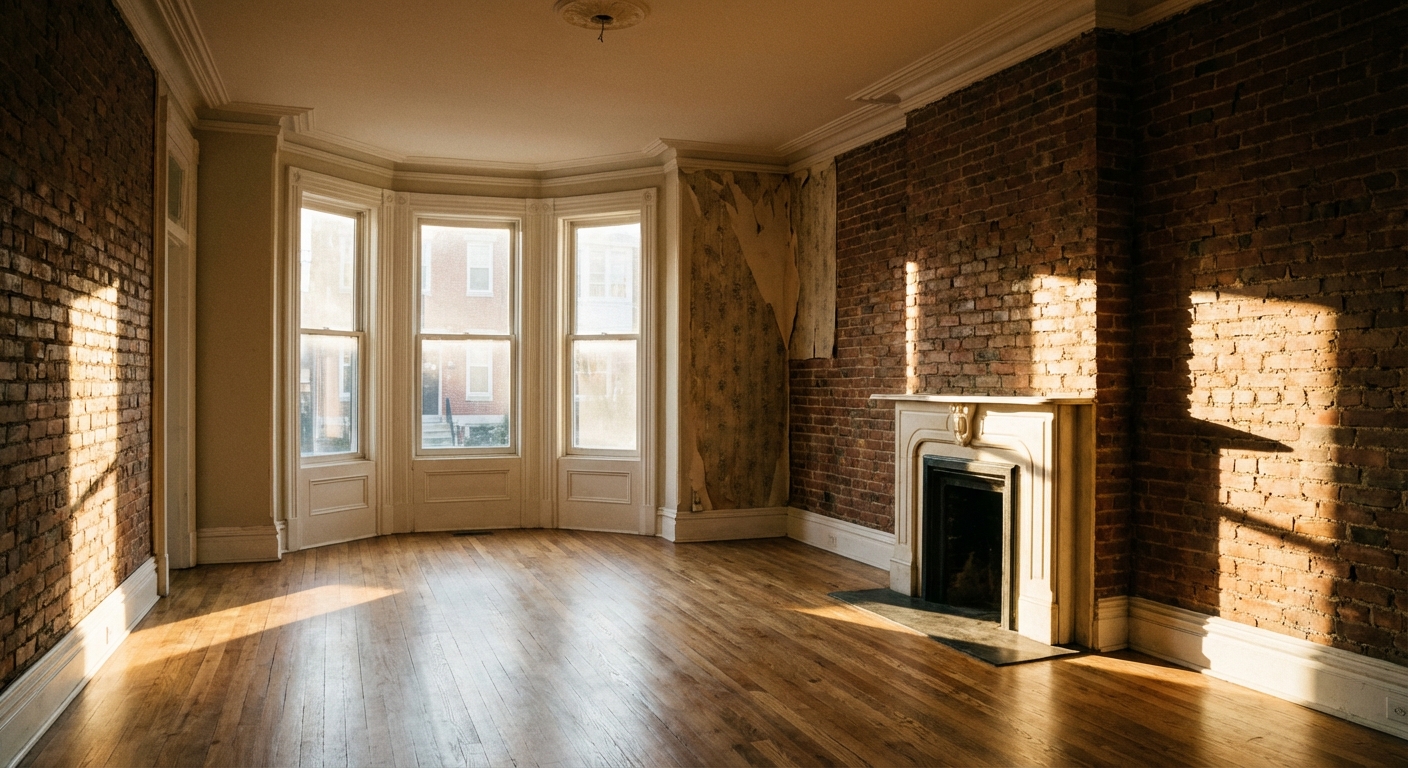
Baltimore’s older housing stock — many rentals in Dundalk, Essex, and Towson are 50+ years old — often means more repair work between tenants than you’d see in newer construction markets. Plaster walls instead of drywall, original hardwood floors that need refinishing, and aging plumbing fixtures all add to turnover prep costs.
3. Marketing and Advertising: $100–$500
Listing a property on Zillow, Apartments.com, and local platforms costs money if you want premium placement. Professional photos run $100–$200. Some landlords pay for featured listings or social media ads to fill units faster. Even if you list for free on basic platforms, your time spent writing descriptions, taking photos, scheduling showings, and answering inquiries has real value.
4. Tenant Screening: $50–$150
Running credit checks, background checks, income verification, and rental history verification costs $30–$50 per applicant. Most landlords screen two to three applicants before placing a tenant, bringing the total to $50–$150. Cutting corners here to save money is a false economy — poor screening leads to more turnovers, completing a costly cycle.
5. Administrative and Legal Costs: $200–$500
New lease preparation, move-in inspection documentation, security deposit handling (which now requires a separate escrow account in Maryland), key changes, utility transfers, and Baltimore County rental license updates all take time and sometimes money. If you use an attorney to review lease terms — a good idea given Maryland’s recent landlord-tenant law changes — add another $200–$300.
6. Your Time: Priceless (But Probably $500+)
This is the cost self-managing landlords rarely count. Between coordinating repairs, meeting contractors, showing the unit, processing applications, signing leases, and handling the move-in, a single turnover easily consumes 15 to 25 hours of your time. If your time is worth $25–$40 per hour, that’s $375–$1,000 in opportunity cost.
Total Turnover Cost Per Unit
| Cost Category | Low Estimate | High Estimate |
|---|---|---|
| Vacancy loss (21–45 days) | $1,700 | $3,400 |
| Turnover prep and repairs | $800 | $2,000 |
| Marketing and advertising | $100 | $500 |
| Tenant screening | $50 | $150 |
| Administrative and legal | $200 | $500 |
| Your time | $375 | $1,000 |
| Total | $3,225 | $7,550 |
Why Baltimore Has Higher-Than-Average Turnover Costs
Several factors make tenant turnover more expensive in the Baltimore market specifically.
Older housing stock means more wear and tear between tenants. A unit built in the 1960s in Parkville needs more prep work than a 2020 build in Columbia. Original windows, older HVAC systems, and dated kitchens all require more maintenance and show more wear after each tenancy.
Seasonal rental demand swings sharply in Baltimore. Summer (May through August) is peak rental season — units fill fast and rents are strong. Winter turnovers (November through February) can mean 45+ days of vacancy because fewer people are moving. If you can avoid turnovers in winter, you save thousands.
The new one-month security deposit cap means less financial cushion when a tenant does leave damage. Previously, Maryland allowed two months’ rent as a deposit. Now, you’re limited to one month. On a $1,700 unit, you’ve lost $1,700 in damage protection. This makes tenant selection and retention even more critical.
7 Proven Strategies to Reduce Tenant Turnover in Baltimore
1. Respond to Maintenance Requests Within 24 Hours
This is the single biggest factor in tenant retention, and the data backs it up. Properties that respond to maintenance requests within 24 hours see renewal rates 15–20% higher than those with slower response times. You don’t have to fix the problem in 24 hours — you have to acknowledge it, communicate a timeline, and follow through. Tenants leave when they feel ignored, not necessarily when things break.
The Mindful Landlord offers a 4-hour emergency response time and next-business-day response for non-emergencies, with a licensed general contractor on staff who handles most repairs without the markup of subcontracting.
2. Start the Renewal Conversation 90 Days Out
Don’t wait until the lease is about to expire. Reach out 90 days before the lease end date — which also conveniently aligns with Maryland’s new 90-day rent increase notice requirement. Ask the tenant if they’re planning to stay, what would make their experience better, and whether they have any outstanding concerns. This conversation often surfaces small issues you can fix cheaply that would otherwise push the tenant to move.
3. Price Rent Increases Strategically
With Baltimore City average rents around $1,650 and rents growing roughly 1–2% year over year, a modest 2–3% annual increase is usually absorbable for tenants. A 10% jump triggers apartment hunting. Run the math: a 3% increase on $1,700 is $51 per month, or $612 per year. A turnover costs $3,500 minimum. Even if you kept rent flat for a year, you’d still come out ahead compared to losing the tenant and facing turnover costs.
4. Invest in Small Upgrades Between (or During) Tenancies
Small improvements signal to tenants that you care about the property and their comfort. High-impact, low-cost upgrades include updated light fixtures ($50–$100), new faucet hardware ($30–$80), fresh caulking in bathrooms ($20), smart thermostat installation ($100–$150), and ceiling fan addition ($150–$250 installed). These investments pay for themselves by extending the average tenancy even by a few months.
5. Build a Relationship, Not Just a Transaction
A quick check-in text every quarter, a holiday card, or a small gesture like a $25 gift card on their lease anniversary costs almost nothing and creates goodwill that makes tenants think twice before leaving. People are less likely to leave a landlord who treats them well, even if a slightly cheaper unit becomes available.
6. Conduct Proactive Seasonal Inspections
Twice-yearly inspections — spring and fall — catch small problems before they become expensive repairs or tenant complaints. In Baltimore, this means checking HVAC systems before summer and winter, inspecting gutters and downspouts (critical for Baltimore’s row homes and older properties), testing smoke and CO detectors, and looking for water damage or pest issues. Tenants actually appreciate proactive inspections because it shows you’re maintaining their home, not just collecting rent.
7. Offer Lease Renewal Incentives
If a tenant is on the fence about renewing, a small incentive can tip the decision. Options include a one-time carpet cleaning or professional deep clean (cost: $200–$400, savings vs. turnover: $3,000+), a minor upgrade they’ve requested like new blinds or a kitchen faucet, waiving one month’s rent increase in exchange for a two-year lease, or a $100–$200 renewal bonus. The math always favors spending $200–$500 on retention over $3,500–$7,000 on turnover.
How The Mindful Landlord Minimizes Turnover for Baltimore Landlords
Our entire management approach is built around keeping good tenants in place. It starts with rigorous screening — credit, income (3x monthly rent minimum), rental history, and eviction checks — so we place tenants who are likely to stay. Our 98% occupancy rate across 50+ Baltimore County properties isn’t an accident. It comes from fast maintenance response (4-hour emergency, next-day standard), proactive communication with tenants, strategic rent pricing based on real-time market data, twice-yearly property inspections, and a renewal process that starts 90 days out with a personal conversation. When turnover does happen, our 21-day tenant placement guarantee means minimal vacancy loss. And because we have a licensed general contractor on staff, turnover prep costs are lower than what most landlords pay using outside vendors.
FAQ
How much does tenant turnover cost in Baltimore?
The average tenant turnover in Baltimore costs landlords between $3,500 and $7,000 per unit. This includes vacancy loss (the largest component at $1,700–$3,400), turnover prep and repairs ($800–$2,000), marketing, screening, administrative costs, and your time. Winter turnovers cost more due to longer vacancy periods.
What is the average vacancy period in Baltimore?
The average time to fill a rental vacancy in the Baltimore metro area is 21 to 45 days, depending on the season, location, and property condition. Summer months (May–August) typically see the fastest fills, while winter turnovers (November–February) can stretch to 45–60 days.
How can I keep tenants from leaving my Baltimore rental?
The most effective retention strategies are fast maintenance response (within 24 hours), starting the renewal conversation 90 days before lease end, keeping rent increases modest (2–3% annually), making small property upgrades, and building a personal relationship with your tenants. Properties with responsive management see 15–20% higher renewal rates.
Is it cheaper to keep a tenant or find a new one?
It is almost always cheaper to keep an existing tenant. Even if you skip a rent increase entirely for one year (costing you $600–$1,200 in potential revenue), the savings compared to a $3,500–$7,000 turnover make retention the clear financial winner. Small gestures like lease renewal incentives ($200–$500) deliver enormous ROI compared to the full turnover cost.
Ready to stop losing money on turnover? Get your free rental analysis today — see what your Baltimore property could earn with hands-off professional management that keeps tenants renewing.
Call (443) 378-9456 or visit the-mindful-landlord.com/contact for a same-day response.