Yes, Baltimore landlords need a license — and most need more than one. If you own a rental property in Baltimore City, you are legally required to hold a Rental Facility License. If your building was built before 1978, a separate lead paint registration with the Maryland Department of the Environment (MDE) is also mandatory. Miss either and you face fines up to $1,000 per day and a court ruling that voids your right to collect rent. Here is exactly what you need, who issues it, and what changed in 2026.
Do Baltimore Landlords Need a License to Rent?
Baltimore City Rental Facility License: Who Needs One
Every residential rental unit in Baltimore City — single-family homes, rowhouses, multi-family buildings, basement apartments — requires a Rental Facility License issued by the Department of Housing and Community Development (DHCD). There is no small-landlord exemption. The fee is approximately $30 per unit annually as of 2026, with annual renewal. DHCD may schedule a pre-licensing inspection for multi-unit properties, checking smoke and CO detectors, working HVAC, and general habitability. In Hampden, where older rowhouses dominate the rental stock, nearly every building also triggers the lead paint requirements below — budget for both applications from day one.
Baltimore County and Surrounding Jurisdiction Requirements
Baltimore County runs its own rental registration program, entirely separate from Baltimore City’s. If you own rentals on both sides of the city-county line, you comply independently with each jurisdiction. Baltimore County’s program includes its own inspection scheduling, fee schedules, and renewal timelines. Check with Baltimore County’s Bureau of Permits, Approvals, and Inspections for current requirements.
When the License Requirement Kicks In
The Rental Facility License requirement applies before you sign a lease or collect a security deposit. Under Maryland Real Property §8-211, landlords who were never licensed cannot enforce lease terms — including collecting rent already paid. Tenants increasingly know this and use Baltimore City 311 to report unlicensed rentals. Tenant advocates now routinely check DHCD registration status before filing in rent court.
Lead Paint Registration: The Requirement Almost Every Baltimore Landlord Misses
Maryland Lead Paint Risk Reduction Act: Pre-1978 Properties
Most Baltimore City rowhouses were built before 1978. The Maryland Lead Paint Risk Reduction Act (Md. Code, Environment §6-8A-01) requires landlords to register pre-1978 rental units with MDE and perform risk reduction treatments — or achieve lead-free or lead-free-equivalent certification — before each new tenancy. This requirement resets with every new tenant. Before a new occupant moves in, current MDE documentation must be on file. Fines for non-compliance run up to $500 per day per violation.
MDE Registration vs. Lead-Free or Lead-Free-Equivalent Certification
MDE registration is the baseline. Beyond registration, landlords can pursue lead-free or lead-free-equivalent certification, which reduces ongoing per-tenancy treatment obligations. The certification path costs more upfront but pays off over multiple tenancy cycles. For Hampden rowhouses with painted wood trim and original windows, lead-free-equivalent is often the most practical path.
What Happens If You Skip Lead Registration in Maryland
Beyond the daily fines, unregistered landlords face civil liability if a child in the unit is diagnosed with elevated blood lead levels. Maryland courts have imposed significant damages in these cases. MDE’s program cross-references properties registered with DHCD but not with MDE — holding a Rental Facility License does not protect you from lead paint enforcement.
DHCD Registration and Annual Reporting Requirements
City DHCD vs. State MDE: Which Agency Regulates What
DHCD (city-level) issues the Rental Facility License and handles code enforcement. MDE (state-level) handles lead paint registration and environmental compliance. These are independent programs with separate applications, separate fees, and separate renewal cycles. There is no single unified application that satisfies both requirements.
Required Disclosures to Tenants at Move-In
At lease signing, Baltimore landlords must provide: the lead paint disclosure (pre-1978 units), the name and contact for a Maryland registered agent, and emergency maintenance contact information. Missing required disclosures is a separate code violation from the licensing issue. DHCD provides a standard disclosure packet for Baltimore City tenancies.
How to Check Your Property Compliance Status Online
Baltimore City 311 and DHCD’s online portal allow compliance lookups by address. MDE has a separate search tool for lead paint registration status. Both tools are publicly accessible — tenant advocates regularly use them to identify unlicensed landlords before rent court filings.
The Real Cost of Getting This Wrong
Fines, Voided Leases, and Rental Income Forfeiture in Maryland
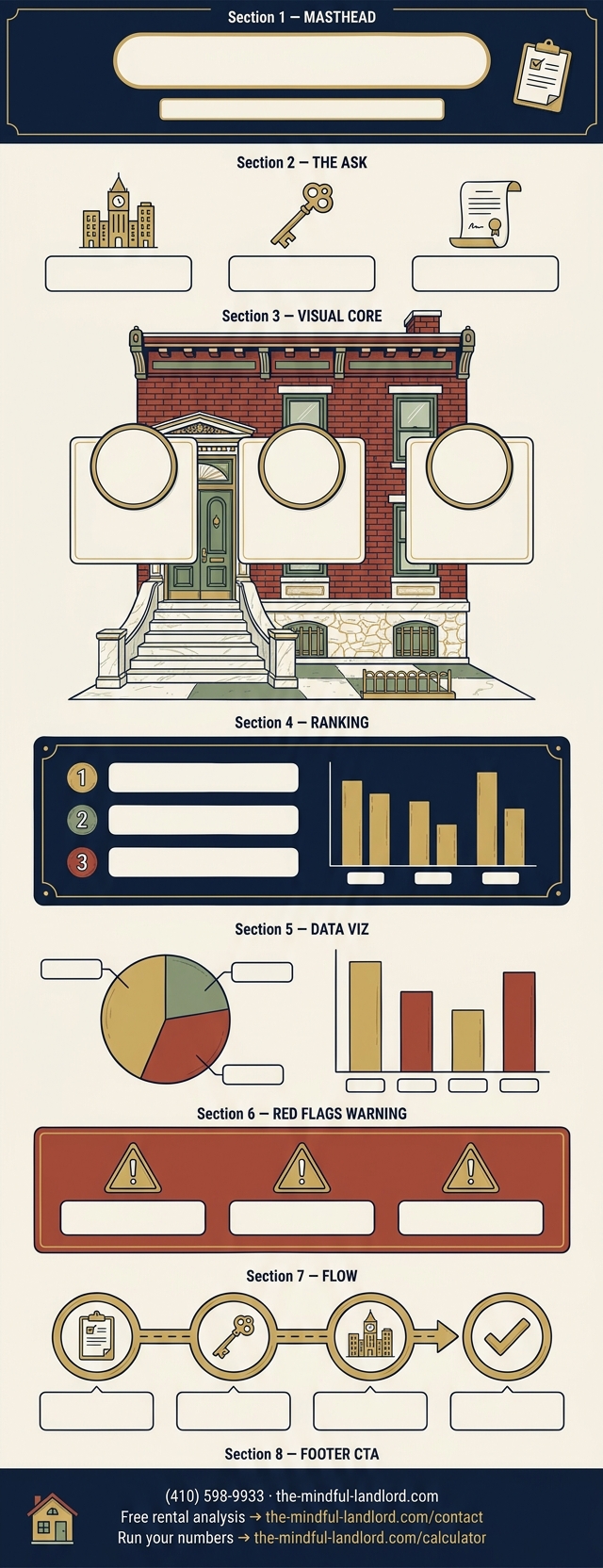
Baltimore City fines for unlicensed rentals run up to $1,000 per violation per day. Maryland Real Property §8-211 gives courts authority to void leases and, in some rulings, order landlords to return rent already collected. A 10-day enforcement action generates $10,000 in fines. Add $5,000–$15,000 in legal fees and you have wiped out years of net operating income on a single rowhouse.
Before You Collect a Dollar, Run the Numbers on Compliance Cost
The annual compliance cost is modest. A Rental Facility License runs ~$30 per unit per year. Lead paint registration and risk reduction typically run $200–$800 per new tenancy for a standard rowhouse. A Hampden rowhouse licensed at $30/year costs $30. One enforcement action costs $10,000–$25,000 all-in. The math is not close.
With 50+ properties managed across Baltimore and 20+ years of compliance experience, TML tracks every renewal deadline, every lead paint registration cycle, and every DHCD reporting requirement. Model your Baltimore rental’s full compliance cost against its actual rent roll with the TML rental calculator — and see exactly how much margin you have before one enforcement action becomes an income wipe-out. Call (443) 378-9456 for a free compliance audit before your next tenancy.
How TML Keeps 50+ Baltimore Properties Continuously Licensed
TML manages properties across Baltimore City and Baltimore County — dual-jurisdiction compliance every year. With a 98% occupancy rate, units turn over regularly, which means MDE lead paint requirements trigger on a consistent cadence. TML’s compliance calendar tracks every unit’s license renewal, every lead risk reduction window, and every disclosure requirement. Self-managing landlords face the same legal obligations with less institutional support.
Step-by-Step: How to Get Licensed as a Baltimore Landlord
Step 1: Baltimore City Rental Facility License Application
Apply through DHCD’s online rental registration portal at dhcd.baltimorecity.gov. You will need the property address, unit count, owner contact information, and a Maryland registered agent if you own through an LLC. License issuance typically takes 10–15 business days. Pay the per-unit fee at application and renew annually.
Step 2: MDE Lead Paint Registration (if pre-1978)
Register through MDE’s online portal at the-mindful-landlord.com. For each pre-1978 unit, document the property address, current lead paint status, and certification level. Before each new tenancy, arrange a risk reduction treatment or confirm current certification is on file. Retain all documentation — MDE can request it during enforcement actions.
Step 3: Annual Renewal and Inspection Readiness
Set calendar reminders for both DHCD license renewal and MDE registration review. For multi-unit buildings, maintain a compliance file per unit: license copy, MDE registration, lead paint disclosure signed by each tenant, and emergency contact documentation. Properties with current documentation pass proactive city inspections without incident. Properties with gaps become enforcement targets.
What Changes in 2026: Updated Baltimore Licensing Rules
Baltimore City’s expanded proactive inspection program now schedules inspections of registered rentals rather than waiting for tenant complaints. Properties current on DHCD registration receive standard walkthroughs and clearance. Properties with lapsed licenses are flagged for enforcement. Maryland HB 693, effective 2026, increased lead paint penalties for repeated violations and requires MDE to cross-reference new tenancy filings against the lead paint database — landlords with unregistered pre-1978 units now receive automatic enforcement referrals when a new lease is filed in court. Short-term rental operators (Airbnb/VRBO) face an additional licensing layer: Baltimore City’s short-term rental permit sits on top of the standard Rental Facility License and carries owner-occupancy requirements in some zones. If you are weighing long-term vs. short-term rental strategy, model both with the TML calculator.
Frequently Asked Questions About Baltimore Landlord Licensing
- Do I need a rental license to rent out a single-family home in Baltimore City?
- Yes. Baltimore City requires a Rental Facility License for all residential rental properties, including single-family homes. Apply through DHCD, pay the per-unit fee (~$30/unit as of 2026), and expect a possible pre-occupancy inspection. Operating without a license can void your lease and expose you to fines up to $1,000 per day.
- How much does a Baltimore City rental license cost in 2026?
- The Rental Facility License fee in Baltimore City is approximately $30 per unit annually as of 2026. Multi-unit buildings pay per unit. Lead paint registration with MDE is separate, with its own fee schedule based on property type and certification level.
- What happens if I rent a Baltimore property without a license?
- Under Md. Real Property §8-211, unlicensed Baltimore landlords risk lease voidability, loss of the right to collect rent, and city fines up to $1,000 per violation per day. Tenants can report unlicensed rentals to Baltimore City 311. Courts have ruled in favor of tenants seeking rent restitution from unlicensed landlords.
- Does the Maryland lead paint law apply to my Baltimore rental?
- If your property was built before 1978, the Maryland Lead Paint Risk Reduction Act applies. You must register with MDE and perform risk reduction treatments or achieve lead-free/lead-free-equivalent certification before each new tenancy. Non-compliance carries fines up to $500 per day and significant civil liability.
- Is Baltimore County rental licensing different from Baltimore City?
- Yes. Baltimore County has its own rental property registration program, separate from Baltimore City’s Rental Facility License. Requirements, fees, and inspection protocols differ. Landlords with properties in both jurisdictions must maintain compliance separately with each authority.